Shuck and Jive


Friday, October 11, 2019

Protests in Iraq: Saving the Iraqi People

For the past week I have been receiving messages and comments with pictures and videos and hashtags “Save the Iraqi People.”


I am not sure what to make of this. Some of the comments on my Facebook page have been aggressive and accusatory because according to some I have not done my part to support the demonstrators and their cause.


It is true. I have been hesitant to support the cause especially as I do not know what the cause is, what the goals are, who the participants are, and how I can best support truth, justice, and peace in this case. All I know is that a lot of people have died and many more have been injured. I am certain that most if not all of those who have died and who have suffered are innocent people and righteous sufferers. I am distressed over that. There is not much I can do from my laptop in America except to express my sorrow, offer my prayers for justice and peace for Iraq, and offer some of my thoughts regarding all of this.

Let’s break this down.

I trust absolutely no one. It is nothing personal. It is just that my Facebook page of 5,000 friends and 8,000 followers is teeming, swarming, and infested with agents. These agents represent intelligence agencies from the U.S., Israel, Saudi Arabia, and other places as well. I have no idea who is or who is not an agent. Not only that, but even those who are not agents are subject to disinformation and deception. This goes for me. It goes for you. I do not trust any picture or any video from anyone. It doesn’t mean I think the images are deceptive. I cannot know. I don’t know the context. I am not there. I can’t speak the language. I do not know what is happening. I know nothing.  I don’t know who is doing what to whom. Even if I did, I don’t know what to do about it.

When I receive these memes with hashtags to “Save the Iraqi People” I have no idea what to do about that. I could blindly pass it on in the hopes that someone somewhere will save the Iraqi people. I know it won’t be me. I cannot save the Iraqi people. As much as I love the Iraqi people and have been embraced by them since I went to Iraq for Arba’een last year, and as much as I sympathize and empathize, I cannot save you. I don’t think anyone with whom I would share the meme will save you either. That is the point.

It isn’t that the message isn’t out. The New York Times got the message. They know that Iraqis are protesting and dying. Some are salivating over it. It is a great opportunity for the opportunistic to take a bite out of what is left of Iraq and seek to isolate Iran.
The harsh truth for the United States is that Baghdad is too dependent on Tehran and cannot manage without Iranian natural gas and other products that meet its day-to-day needs. Iraq’s annual trade with Iran is $12 billion while American exports to Iraq are a mere $1.3 billion. 
Washington can help reduce this dependence and reinforce Iraqi sovereignty by enabling Baghdad to build stronger relations with countries that can provide alternatives. This can take the form of a road map to energy independence involving facilitating strategic dialogues on shared energy grids and new pipeline connections with the Gulf states and Jordan.
What is this meme, "Save the Iraqi People" intended to accomplish?  Whose help is being sought?

Is the request for me to tell my congressperson to send more US military to Iraq? Should my president, Donald J. Trump fire some missiles into Baghdad? Will that save the Iraqi people? That is how America saves. That is how we “saved” Libya. That is how we “saved” Syria. That is how we “saved” Iraq already on more than one occasion. If we don’t blow up countries ourselves we arm and train mercenary terrorists (ISIS by whatever name) to do it.

If you want an outside government to save you, America (or any Western/NATO country) is not a wise choice. You would do better to pray to Satan. We are Shiva, destroyer of worlds. Honestly, if you want an outside government to save you, I would start sending those tweets, hashtags, and memes in Persian. Regardless of the bad blood between Iraq and Iran, Iran is 1,000 times more likely to be a better ally to Iraq than Israel’s pet, the United States.

Remember America armed and funded both sides in the Iran/Iraq War and America put Saddam in power before taking him out over the course of several decades, killing two million Iraqis and poisoning the entire country with depleted uranium for good measure. The Israeli/American neocons want to mix it up with Iran next. They are loving this death and destruction and the meme to “save the Iraqi people” and to divide Iraq from Iran at Arba’een. They would love to save Iraq by turning it into Greater Israel.

It would not shock me in the least to discover that the current Iraqi government is infiltrated with U.S. and Israeli agents shooting at innocent Iraqis. Not only that but Israel likely employs a lot of sharpshooters who speak Farsi so that Iraqis will blame Iran. Who benefits from violence against Iraq? Not Iran.

In terms of what to do about your government, I certainly don’t know, and in my opinion, nor does any honest person in America. Our own government is in shambles. How could anyone in America know any more or love the Iraqis any more than Ayatollah Sistani?
The office of the Shia Muslim Supreme Religious Authority already suggested — on August 7, 2015 — that the relevant authorities should form a committee comprised of well-known and highly-qualified figures, whom the Iraqis trust, and such figures should be from outside the realm of the government. The committee has to be tasked with initiating the prerequisites to combating corruption and achieving reform, and it should work side by side with the representatives of the demonstrations in order to listen to the demands of the Iraqi people and their perspectives. And after the committee has finished initiating the prerequisites — whether legislative, executive, or judicial — all the prerequisites must come into effect immediately. This was the suggestion the government didn’t act upon, but it could perhaps be an appropriate solution to the current crisis.
I empathize with you. I can’t save you. No one in America can. You will have to save yourselves. Perhaps your inspiration for that will be found in Karbala.

Sunday, October 06, 2019

Expanding the Heart

These are the notes from a speech I gave at the Hussain Day Conference in Somerset, New Jersey at the Masjid-E-Ali Mosque. The conference was entitled, "Rise Above Hate."
It was sponsored by Payam-e-Aman and Stand With Dignity


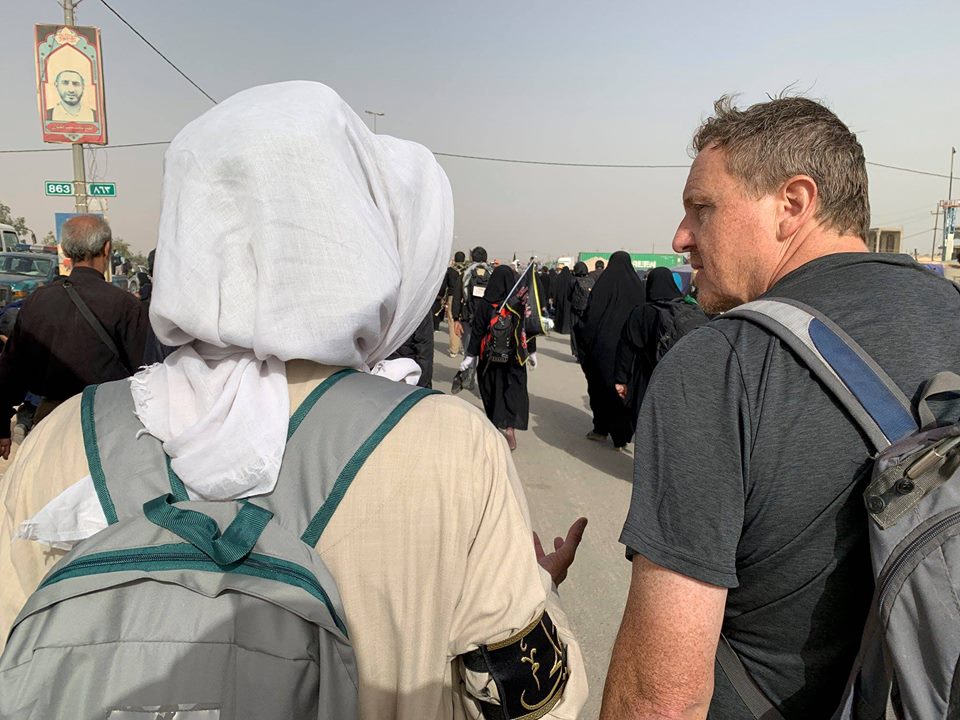
Last year I had the opportunity of a lifetime. I don’t say that lightly. It is an experience that will stay with me for my lifetime, insha’Allah.  I visited the shrine of Imam Hussain (peace be upon him) in Karbala, Iraq during Arba’een, the largest annual peaceful human gathering in the world.  Estimates range from a low of 15 million to upwards of 30 million people who make the journey to Karbala every year. 

My friend and I made a film about it. You can find it on YouTube, “For Love of Hussain.” 

The trip was sponsored by The Husayniah Islamic Society of Seattle. Sister Zahra Abidi has a vision for a Hussain Revolution in the United States that includes bringing people together to discuss important things, sometimes controversial things, but things that matter not only to Muslims but to all human beings. That is how I met her. 

In addition to being a pastor I host a radio show on KBOO, a community radio station in Portland. I moderated a panel discussion regarding the war against Yemen at Portland State University in February 2018. It was entitled “The US – Saudi Coalition: Bringing Peace or War?” 

It was in the follow-up of that conference during an email exchange that I first heard of Hussain. He was referenced in regards to the panelists, all of whom had taken risks, and had sacrificed in varying ways for their work in bring truth to light. Each of the panelists was a truth-teller. They told inconvenient truths about the powers that be. 

That is how I was introduced to Imam Hussain (Peace Be Upon Him). He was a truth-teller and was martyred for embodying the truth. I knew nothing else about him except that.  I wanted to learn more. 

Sending Christians and Sunni Muslims to Iraq for Arba’een is one of the things Sister Zahra and the Husayniah Society of Seattle does. I am happy to support her good work. They have just purchased property in the north of Seattle, in hopes, insh’Allah, of creating a center. I am sure she would love to talk with you about it and hear your encouragement. You can visit their website.  Search Husayniah Seattle.

The Husayniah Islamic Society of Seattle paid for the trip for my friend, Josh, and me. Josh has done some filming. So we went to make an amateur documentary.  It was more than that for me. This was timely in my life. It was a search, you could say. I have been experiencing I guess you could say a spiritual growth spurt.  Maybe it is a mid-life crisis.  I have discovered the need in my own life to search more deeply about what is really going on in our world and what are the forces at work and to what paths we are being led. I realize I cannot trust our traditional sources of information, especially the mainstream media to do that.

I am discovering that these forces are dark forces as the title of this conference indicates. Rise Above Hate.  What is hate? How do we rise above it? 

I didn’t go To Arba’een for healing. I didn’t go for intercession. I didn’t go for forgiveness of sins. I didn’t go for mourning.  I didn’t know people went for all those reasons until I went there and started talking with people. 

I went because I wanted to see this person and why so many were attracted to him. I wanted to see the person whose life was so pure, that he gave it to save his grandfather’s faith. I wanted to visit the person who didn’t compromise his principles. I wanted to see the person who might inspire me in some way to find courage and character for whatever it is that Allah is calling me to do. I wanted to see the person who in his life and in his death rose above hate and showed us all how to do it.

Some Muslims I have met are curious as to whether I have converted or reverted to Islam. I don’t know how to answer that exactly. I like to think that my faith has expanded. I have a heart for Jesus (peace be upon him) and I always will, insh’Allah. But I also have a heart for Hussain (peace be upon him) and a heart for Mohammad (peace be upon him and his progeny).  Being introduced to Hussain and the Prophet and his family and the Islamic faith in loving ways by loving people has expanded my heart. 

You really cannot have an interfaith interaction and expect not to be changed in important ways. Unless we are vulnerable enough to have our hearts touched by another, it is not really an interaction. It is just us trying to convince others of our position. It is just a sales pitch.

I cannot worry about whether or not others are changed by what I say. That is up to God. I want my heart expanded by others—by you.  Or to put it more accurately, to have God expand my heart through you. 

That has happened a great deal in this past year in all my interactions with Muslims through the Islamic Center across the street from my church in Portland and with the Husayniah Society in Seattle as I mentioned, through my on-line interactions, through the generous opportunity to attend conferences, through the helpful resources in which I am slowly beginning to learn more about Karbala, through reflection, through my ministry in my church, and, of course, through the opportunity I was given to visit the holy sites in Iraq. 

That is what I think it means to “rise above hate.”  It means to have one’s own heart expanded. Let me explain.

Love expands the heart. Hate shrinks the heart.  

You know the book and movie, “The Grinch who Stole Christmas” by Dr. Seuss?  The Grinch’s heart was three sizes too small, remember? He hated the Whos in Whoville. Then, by a miracle, his heart expanded. He met a Who, Cindy Lou Who, who showed him kindness and he saw what the Whos really loved and valued, what the birth of Jesus (peace be upon him) meant, not things, but generosity, and the Grinch’s heart grew three sizes that day.  

Sometimes the simplest children’s stories tell the most profound truths.

We cannot stop hate by hating the haters. We cannot just expand someone else’s heart. Hate takes a long time to shrink a heart. What does it take to shrink a heart with hate? It takes isolation. It takes hurt. It takes ignorance. It takes fear. It takes prejudice. It takes suspicion. It takes rejection. It takes anger. It takes envy. It takes greed. It takes acceptance of falsehood. It takes abuse. It takes oppression. It takes time to allow hate to shrink our hearts. 

Hate is out there. We can find it in our institutions in our governments. They can be overtaken. In my tradition, we call this force the demonic. It can take over a whole nation. The demonic does not work for the good of the world or the people or its creatures. It works to divide us, to shrink our hearts with hate. The demonic works in secret. It works in the dark. It works with deception. It works with lies. It works with marketing. There are forces at work in the world that want to shrink our individual hearts and our collective heart as a people. So we live in suspicion and fear and become docile to these forces.

Any of us, all of us, are susceptible to having hate shrink our hearts. Hate is like a toxic weed that grows in the soil of ignorance. Hate is the result of so many complex negative emotions. You can’t convince people or prove to people or sell people on your opinion.  You can only actually love. You can only do that by allowing your own heart to be expanded by another.

Rising Above Hate. How do we do that? If hate shrinks our heart, how does love expand our heart?

I should add this: The Latin root word for heart is cor. COR. Where we get the word coronary. We also get the word courage. We think of someone with the heart of a lion, like Hussain’s half-brother Abbas, as having the heart of a lion, a courageous heart.  As your heart expands, as your heart grows with love, you become courageous. 

How do we become courageous? How do we expand our hearts? 

The Buddha in the Dhammapadda is reported to have said: 

Do not consider the faults of others
Or what they have or haven’t done.
Consider rather
What you yourself have or haven’t done.

We cannot do that if we think we want to stop the hatred of others.  We want to stop hate. Therefore we want to stop them, those haters.  You can’t just tell people, “You are hateful. Stop it.” It won’t work.  We can only allow our own hearts to be expanded.

So I am in the Shrine of Imam Hussain (peace be upon him). It is beautiful. The air conditioning is on. It is filled with the sound of prayer. People are crying. Some are standing. Some are sitting. Some are in various positions of prayer.  Poetry is being recited from many places. I don’t understand a word of it, except now and then I hear a name I recognize, Ali, Zainab, Abbas, Hossein.

This is about a week before Arba’een. I am with the tour group. I decide I want to go and touch the big box in the center of the shrine, the lattice work above the grave of Hussain. At first I wasn’t sure if I would do it, or should do it. If it was appropriate. Hussain was not a person in my religion. But I kept hearing all week that Hussain is for everyone. So I decided to go and do it. 

I don’t know what it is like on the women’s side, but on the men’s side, even a week before the day of Arba’een the place is packed. it is a push and pull like ocean waves of bodies. Your feet almost leave the ground. There are so many people. You know where you are headed. And you aim for it. But it is like swimming in the ocean. You don’t need to be aggressive but you need to hold your own. You swim through the bodies, pushed left and right. Finally, I got close enough, almost there.  

I should stop again. I was conscious of being different. Different religion. I only speak English. From America. My reddish hair, now reddish-gray, pale skin.  Of the thousands of people inside the shrine that day, I was probably the whitest guy in the room. I reach up and put my hand up to touch the lattice work and I can’t reach it. 

A hand took mine and pushed it up against the grate. It was a brown hand, taking my white hand up against the final resting place of Imam Hussain (peace be upon him). It was a visual imprint in my mind that beyond all color, all race, all religion, all language, the language of love and truth and courage is one. The love of Hussain. Our eyes met. We just looked at each other. 

As I swam away, just a few yards away, I saw this man. He stared at me. Tears were streaming down his face. He asked me as many did on my trip, “Where are you from?” I told him, America.  He just started bawling. He hugged me and kissed me. I have joked that I never have been kissed by so many men with scratchy beards.  

But what is this?  

Iraq. A country that felt post-apocalyptic to me. I, like many of us Americans, watched from a distance as our leaders lied us into war, destroyed Iraq, and then ignored its suffering. No one goes there. No one that I know, except my brother-in-law. He is a professor at NYU and he goes often to the northern part of Iraq because of his work of peacebuilding with the University of Duhok. Besides my brother-in-law and soldiers, I know of no one who had been to Iraq. A country that Americans like me need to visit. A country devastated by the demonic, by lies and wars, by bombs and depleted uranium. By hatred from outside powers, mercenary terrorists and puppet tyrants, the people left to fend for themselves.  

The US state department tells Americans not to go to Iraq.  Too dangerous. Bad. Whatever. What did I find? I found love. I found tears. I found joy. I found hope. I found my heart had expanded.  A Christian American was embraced and shown the love of Hussain (alayhi s-salam).

That is how we rise above hate.  We allow ourselves to be vulnerable so our hearts can expand. If you cannot go to Arba’een, then bring Arba’een here. 

Courage is the result of an expanded heart. With courage is insight to tell the truth as best you know it when you need to tell it.  That is what I try to do now in my ministry and on my Facebook page and radio show, where ever I do my thing. That doesn’t mean I know truth more than others. That doesn’t mean I am not ever wrong. I am wrong often.  Courage is admitting it and learning from it.  

Courage does not mean me selling you my truth. It doesn’t mean that. Hearts do not expand that way. You tell what is true and live what is true and Allah does the rest. 

But it does mean that we cannot be afraid of what we know or of what we learn because of the discomfort of truth to us or others or to the powers that deceive. 

Nor can we be afraid of exploring and researching in taboo areas.  
Exposing the demonic and its lies.
That is where the hatred infests.

Nor can we be concerned if people will reject or ridicule or whatever they must do to protect their illusions. Hussain’s sacrifice shattered all illusions.

In particular, he shattered an illusion that you fight hate with more hate and that you lead with power and coercion.  

Hussain showed the world that you lead not with might but with right.  You fight hate with love from an expanded and courageous heart. 

That has always been the way that the true heroes rise above hatred in all its forms.

May we all be heroes in that same spirit.


Monday, September 30, 2019

While It Is Still Not Too Late


My sermon from Sunday, September 29th, 2019 at Southminster Presbyterian Church. Listen to audio here.

How late is it?

For me personally, at the age of 58, it is likely too late to fulfill that dream of playing second base for the New York Mets. That dream should be put on the shelf. My seven-year-old nephew, Cooper, can dream that dream, but for me, it is too late.

The journey of life requires that of us. That is to evaluate what there is still time to do and what must be considered realistically, too late. We may harbor old dreams long past their expiration date. It is healthy to let those dreams go with appropriate mourning and ritual so we can look with clear eyes at what is still yet possible and what dreams fit reality.

It is not easy to let go of dreams. Those dreams can be so much a part of us that we hold on to them even when evidence of their demise is easy to see. We call that denial.

Poor Zedekiah, the last king of Judah before its capture by the Babylonians in the 6th century before Christ. He has had a long relationship with Jeremiah. Almost friends I wonder? Their dance goes like this: Zedekiah asks Jeremiah for a word from the Lord. Jeremiah gives it to him. Zedekiah refuses to heed it. Again and again they repeat that pattern.

When it is too late for anything else, Jeremiah tells him, “Surrender. It is over. Spare your life and your family’s life.” Zedekiah won’t believe it.

And according to the text we heard this morning, even as the Babylonian army is besieging the city, Zedekiah asks Jeremiah why he is prophesying the end for Judah. It would be almost comical if it weren’t so tragic. Denial to the last. Zedekiah is captured. His family is killed before his eyes. Then his eyes are gouged out and he is taken to Babylon in chains. The last king of Judah.

Jeremiah does give one more prophecy. But if Zedekiah heard it, we can’t know if it ever held meaning for him. Jeremiah tells the story of the field he bought, complete with a lot of detail regarding the purchase. The prophecy is that land will be purchased in Judah again. Yes, it is hopeful. A hopeful prophecy. But it will not be fulfilled in the lifetime of anyone listening, including Jeremiah. This hope will be realized on the other side of the devastation. That is hope in the midst of reality. A real hope. It is not fake hope, the hope to which Zedekiah clung.

Some have been showing us that the hour is late for America. I won’t tell you that. I am not as clear of vision as they are nor as brave as Jeremiah. I will just point out that there are those people who say things like that. There is hope for us. Real hope, they say. But it is long past the fake hope of endless happy motoring. That era, they say, will end soon, as the hour is late.

So what do we do?

Well, there is a parable for that.

It is the parable of the rich man and Lazarus. But Lazarus doesn’t have much of a part. The real story is about the rich man. Many people don’t like this parable as it conjures up images of hellfire which many of us traumatized in our childhood religion are glad to have left behind.

In my mind the best interpretation of this parable is by Charles Dickens in his story “A Christmas Carol.” One Christmas Eve awhile back, Ebeneezer Scrooge, the old miser, is visited by three spirits, the Ghost of Christmas Past, Present, and Future, respectively. Scrooge is given a gift that he didn’t deserve. He was able to see his life, past, present, and future.

The Ghost of Christmas Future, unlike the other two spirits, does not speak. He only shows. The death of the crippled boy, Tim. The celebration of the city over what? The death of Scrooge as he realizes seeing his own tombstone.

“Are these things that will happen or may happen?” Scrooge asks desperately to the Ghost who doesn’t answer.

Mercifully, Scrooge awakens, scared witless, but transformed. Much is too late for Scrooge. Too late for the love of his life he traded for greed. Too late for Christmas dinners that he missed with his loved ones. Most of his life is water under the bridge. But he has a little time left. It is not too late for everything. It is not too late for one more Christmas Day spent with joy and generosity.

Through the lens of Charles Dickens is how I see the parable of the rich man and Lazarus.
We might ask,
“Is this what really happens when we die?”
“Is there really a hell?”
“Is there really divine judgment?”
“Or is it just a story?”

Jesus, like the ghost of Christmas future does not answer. He just points to it.

The parable is not for the dead, of course. It is not for Lazarus or the rich man. The parable is for the living.

We can dismiss it as the rich man fears his brothers will dismiss what is written by Moses and the Prophets.

“Send Lazarus back to warn my brothers!” he cries.

“Even a resurrected dead man won’t convince them,” says Abraham. “What you get is what you get.”

Here we are today, September 29th, 2019, confronted by two Bible stories, one from Jeremiah and one from Luke. Bible stories that have been in Bibles long before any of us were around. Bible stories translated into hundreds of different languages, commented upon, reflected upon, debated, heard, dismissed, and received.

What do we do?

Rev. Dr. Martin Luther King, Jr. preached a powerful sermon on this text in 1955. The rich man in Latin is Dives (Dahy-vees) and the King James used Dives as proper name for the rich man. King in his sermon, said Dives’ sin, the rich man’s sin, was not that he was rich, but it was that he refused to bridge the gulf between Lazarus and himself, the gulf now permanent in the afterlife. This is from King:

“Dives is the white man who refuses to cross the gulf of segregation and lift his Negro brother to the position of first class citizenship, because he thinks segregation is a part of the fixed structure of the universe. Dives is the India Brahman who refuses to bridge the gulf between himself and his brother, because he feels that the gulf which is set forth by the caste system is a final principle of the universe. Dives is the American capitalist who never seeks to bridge the economic gulf between himself and the laborer, because he feels that it is the natural for some to live in inordinate luxury while others live in abject poverty. 
Dives sin was not that he was cruel to Lazarus, but that he refused to bridge the gap of misfortune that existed between them. Dives sin was not his wealth; his wealth was his opportunity. His sin was his refusal to use his wealth to bridge the gulf between the extremes of superfluous, inordinate wealth and abject, deadening poverty.
So when Dives cries to Abraham to send him one drop of water at Lazarus’ hands, Abraham replies: “There is a fixed gulf between you now.” There was a time that Dives could have bridged the gulf. He could have used the engineering power of love to build a bridge of compassion between him and Lazarus. But he refused. Now the gulf is fixed. The gulf is now an impassable gulf. Time has run out. The tragic words, too late, must now be, marked across the history of Dives’ life.

King finished his sermon by saying that all of us are Dives in one way or another.

“Each of us is a potential Dives, maybe not rich in material goods, but rich in education, rich in social prestige, rich in influence, rich in charm. At our gate stands some poor Lazarus who has been deprived of all of these. There is a gulf. But the gulf can be bridged by a little love and compassion. Bridge the gulf before it becomes too late. It is now passable. But it can become impassable.”

Rev. Dr. Martin Luther King, Jr. preached that sermon October 2nd, 1955 at Dexter Avenue Baptist Church in Montgomery, Alabama, 64 years ago this week.

Nearly 12 years later on April 4th, 1967, in Riverside Church in New York, he preached the sermon that defined his last days, “Beyond Vietnam.” Exactly one year later, April 4th, 1968, he was assassinated. You can tell me whether or not his assassination had anything to do with his Vietnam sermon. The King family thinks it does.

The point is that it was a good sermon King preached in 1955 in Montgomery. Everyone liked it. It was scholarly, contemporary, and inspirational. Take a lesson from Dives before it is too late and bridge the gulf between yourself and those less fortunate than you.

The sermon he preached in 1967 was not well received. There King preached against the Vietnam War, saying at one point what had happened to the Vietnamese people:

“They move sadly and apathetically as we herd them off the land of their fathers into concentration camps where minimal social needs are rarely met. They know they must move on or be destroyed by our bombs. 
So they go, primarily women and children and the aged. They watch as we poison their water, as we kill a million acres of their crops. They must weep as the bulldozers roar through their areas preparing to destroy the precious trees. They wander into the hospitals with at least twenty casualties from American firepower for one Vietcong-inflicted injury. So far we may have killed a million of them, mostly children. They wander into the towns and see thousands of the children, homeless, without clothes, running in packs on the streets like animals. They see the children degraded by our soldiers as they beg for food. They see the children selling their sisters to our soldiers, soliciting for their mothers.”

King called for the end of the war and for young men and women to become conscientious objectors. Near the end of his sermon he said:

“We are now faced with the fact, my friends, that tomorrow is today. We are confronted with the fierce urgency of now. In this unfolding conundrum of life and history, there is such a thing as being too late. Procrastination is still the thief of time. Life often leaves us standing bare, naked, and dejected with a lost opportunity. The tide in the affairs of men does not remain at flood—it ebbs. We may cry out desperately for time to pause in her passage, but time is adamant to every plea and rushes on. Over the bleached bones and jumbled residues of numerous civilizations are written the pathetic words, “Too late.”

King was vilified, of course, by representatives of the war machine and by the many enemies he had already made over the years in his battle for civil rights. More than that. He lost virtually all support from his friends, colleagues, and supporters in the civil rights movement itself. His last year of life was a lonely year. It was also a year that he felt most alive.

“I have been to the mountaintop and I have seen the promised land,” he said in his last sermon in Memphis before he was shot and killed.

King knew his Vietnam sermon would change the course of his life. He knew the risk he was taking speaking against the war machine. He knew what people would say, that he would lose all that he had worked for, lose his support, lose virtually everything. Lose his own life.

King knew something else. He knew that it was late. He knew that America had not much time, (even less today) to save its soul before it destroys the world. He knew that the hour was late for him. Even at the age of 48, he knew his days were not indefinite. He knew that he had to make a choice. He had to decide what his life was, what his life was worth. He knew that he couldn’t retire on the victories of the Civil Rights Act when the elites were leading the country to hell in Vietnam and beyond.

He made his choice in his time.

He took a lesson from the parable of Lazarus and the Rich Man.

Bible stories. That is all they are. Ancient history and parables. Jeremiah and Zedekiah, the rich man and Lazarus. Just Bible stories. For some people that is all they are and ever will be. For others, Like Martin Luther King, they are the summons from Spirit.

Spirit calling those who would hear that the hour is late.
There is not much time.
But there is time.
Time to end denial and to put on the shelf unrealistic dreams.
Time to act on a realistic hope.
Time to take inventory of your life and what you value.
Time to ask yourself what the rest of your life is for.

Amen.

Friday, September 27, 2019

No Longer "Happy to Be a Presbyterian"

A few weeks ago I was banned from the Facebook group, “Happy to Be a Presbyterian.” I had been a member for some time, close to its beginning, I think. It has about 11,000 members and I think of it as the social media living room for members of the Presbyterian Church (U.S.A.), my denomination that I have served as a minster for 27 years. 

I was informed by one of the moderators that I had broken the group’s rules. I don’t doubt that I broke the rules. I often break rules. But in this case, what rule? What rule was broken?  The moderator did not say except that I broke the clear rules. Spelling that out from my point of view will be the point of this post. 

I should provide a bit of history about my relationship with my denomination. I am probably one of the most obnoxious ministers in the church. Many people do not like me. For good reason. I made a lot of enemies battling for LGBT rights (ordination, marriage). The same for my support of the Jesus Seminar, Evolution Weekend, and atheist ministers. Of course, I wrote and spoke out against the American Empire and its wars and Israel and its genocide of the Palestinians. I wrote about Peak Oil and the coming collapse of the American way of life (which will likely happen in very short order). 

My record is public. You can find all the stuff I have done on my blogs, Shuck and Jive and  Progressive Spirit, and now on Facebook (even as I despise it). You can even read or hear nearly all my sermons including those I have preached at my current church. Speaking of my current church, waters are again rough as you can hear by my most recent sermon and read in my most recent missive to the congregation.  My days as a Presbyterian minister in a pulpit are likely numbered. 

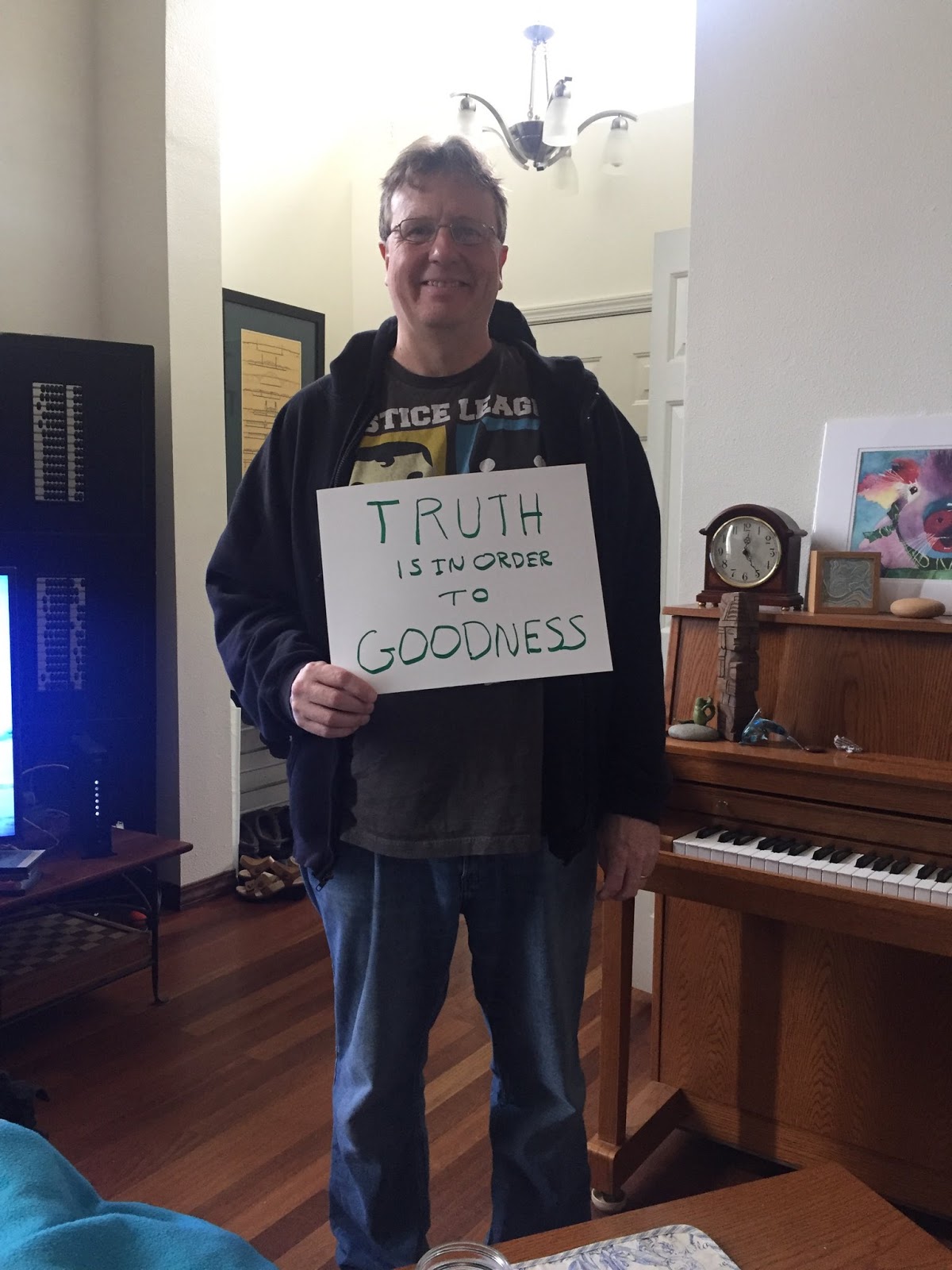
These days I write, speak and post against Islamophobia and in particular anti-Shiism, and have found renewed faith in God through my exposure to the person of Imam Hussain (a.s.) after having journeyed to Karbala. Let’s be clear. My theology like my politics are independent. I will not be owned by any gatekeeper of any religion, political party or movement.  I care about two things—Truth and Goodness.  I affirm this old Presbyterian principle:
“That truth is in order to goodness; and the great touchstone of truth, its tendency to promote holiness, according to our Savior’s rule, ‘By their fruits ye shall know them.’ And that no opinion can either be more pernicious or more absurd than that which brings truth and falsehood upon a level, and represents it as of no consequence what a person’s opinions are. On the contrary, we are persuaded that there is an inseparable connection between faith and practice, truth and duty. Otherwise it would be of no consequence either to discover truth or to embrace it.” (F-3.0104)


With that, let’s go back to what happened at “Happy to Be a Presbyterian”. I posted this link. This was a link to a study completed by the Civil and Environmental Engineering Department at the University of Alaska-Fairbanks regarding the collapse of World Trade Center Tower 7 on September 11th, 2001. The study concluded 

“…that fire did not cause the collapse of WTC 7 on 9/11, contrary to the conclusions of NIST and private engineering firms that studied the collapse. The secondary conclusion of our study is that the collapse of WTC 7 was a global failure involving the near-simultaneous failure of every column in the building.”

Within 38 minutes my post was removed. I posted it again. It was removed again almost immediately. I messaged the three moderators asking them if they removed it.  Each said no. One even suggested that Facebook might have removed it. After messaging the moderators, I posted the link to the study for the third time. It was again removed immediately. I wrote another piece (without the link to the study this time) saying what just happened with my suspicion that Facebook removed the post (they have done that before).  A spirited conversation resulted with many people commenting.

Finally, in the course of the conversation, a fourth moderator emerged and said he removed the post. I told him it would be nice in the future to let me know when that happens. In the course of responding to comments on this post, I once again linked to the study. In short order, the comments were frozen. The fourth moderator messaged me that he froze comments and and that my link to the study was again removed. That was the fourth removal of the link to the study. In my messages with him, he said he closed comments because the conversation was “not productive” and he removed links to the study because it “was not scientific.”  He decided that for 11,000 members of the group. I told him he was working for dark forces by his actions. I complained to the other three moderators about him. I was then told I was banned. 

What rule did I break? 

It wasn’t that I posted something political. Political stuff is posted there often, including previously by me. Maybe my post doesn't concern Presbyterians? It concerns everyone. A Presbyterian touchstone is speaking truth to power. Maybe I am just obnoxious. Maybe they didn't like that I protested the deletion rather than just accept it. I am sure people will say all of those things are rules I have broken. Whatever.

Here is what I think. I am a member of Religious Leaders for 9/11 Truth and have been for nearly ten years. Exposing the lies of our government regarding the events of September 11th, 2001 cannot be tolerated by our media or any of our public institutions including the church even as the church is founded on the truth of Jesus Christ. 

That is the rule that I broke. I posted information that shows that our government lied and continues to lie about the defining event of this century. I posted information from an accredited university. I posted a study showing that our government lied. This is no small, insignificant lie. This lie has resulted in massive surveillance, torture, Islamophobia, the stripping of civil liberties, post 9/11 wars costing trillions of dollars, the destruction of nations, and the deaths of millions. It goes on. It matters. 


A 47-story skyscraper came down in 7 seconds (2.5 of those seconds at the acceleration of gravity). Obviously, it was the result of explosives. This is only the beginning of the lies.  We have been lied to. And I am squealing.

It is Hussain who has given me the spiritual courage to write about it and talk about it come what may. Since going to Karbala, I have been writing and posting more about this (and other crimes of the elites) than I ever have. I don’t care if Muslims or Christians don’t like me talking about this. Muslims don’t own Hussain any more than Christians own Jesus.

Hussain knew he would be martyred. He and his 72 companions versus 30,000? Seriously? What other outcome is there? But he is victorious. His story lives. Thus he lives


As for Jesus. He, too, was martyred in Jerusalem at the hand of Rome and its temple conspirators. He stood for truth. He knew he would be martyred. What did he think he could accomplish turning over tables in the temple? He lived for truth. Like Hussain’s his was a losing cause. But he is victorious. His story lives. Thus he lives. Jesus is also my spiritual inspiration.

It is Jesus I follow to Karbala.
Jesus showed me Hussain.
If I want to follow Jesus, I must follow Hussain.
Hussain shows me how to follow Jesus.

I don’t care about what the scholars of either religion say I have to believe about Jesus or Hussain. I think Jesus was a human being just like the rest of us (this goes against orthodox Christianity). I think Jesus was martyred (this goes against orthodox Islam). As I said, I am independent. 

When Imam Mahdi and Jesus reveal themselves, then I guess we will all know. All of us will likely be wrong about a lot of things. 

In the meantime, I care about truth and goodness. I will speak it so help me God.

I am sad I am no longer “Happy to Be a Presbyterian.” It is my family. But, as we know, all families are toxic when they require you to suppress your truth to be a part of them.

I am leading a study of David Ray Griffin’s book The Christian Gospel for Americans: A Systematic Theology, for four Tuesday evenings in October (8, 15, 22, 29) from 7-9 pm at Southminster. 

Dr. Griffin writes that the church is in a time of status confesionis (confessional status) in regards to the American Empire.  

It is now time for Christians in America—actually, long past time—to engage in an extensive examination of the nature of the American Empire to see if it is so “perverted and oppressive” that Christians, individually and as churches, should “publicly and unequivocally” reject it… 
American political, economic, and military leaders have long been engaged, since at least the end of the Cold War, in a “global domination project,” similar to the Nazi project. Like the Germans, America has used its power toward bringing the whole world under its control. How could we fail to regard this American Empire’s domination project—like the Nazi project—as wholly antithetical to Christian faith?
Our Christian faith at its best would lead us, both as individual Christians and as churches, to oppose the American Empire in the name of God. As long as the church does not explicitly oppose this empire, it is, by its silence, a de facto supporter.

All are welcome. 

Wednesday, January 09, 2019

Apocalypse Now

(Reposted from Progressive Spirit)

I suspect that after this post gets sent, the number of people who follow me via email (currently 2174--see sidebar) will decrease substantially. The Progressive Spirit radio show has ended and I am taking a different turn in regards to the things that I view as important and worthy of my time and hopefully yours. Yet I hope you will be curious enough to stay with me and pass this blog on to others.

We are in an apocalyptic time. Apocalypse means revelation. This is a time of revealing, of making manifest that which has been shrouded. Apocalypse in the popular sense means massive destruction. This time could be that as well especially if we decide as a human species to ignore the revelatory aspect of apocalypse.


But I am hopeful because I believe in God (not Gawd)to use David Ray Griffin's distinction. To believe in God means to believe that morality and purpose are more than human social constructs. Morality and purpose are as real as atoms and supernovas, beetles and Bohemians. The very fabric of the universe is moral and we are a part of it, participating in it, being guided by and, to a degree participating, in its unfolding.

That belief is important, according to Griffin, because without it, without a belief and hope that the universe in some way "cares" we will not be able to face the task before us that is immense beyond measure. That task has come to us in the form of Global Warming or Climate Catastrophe.

Monumental in itself, our situation is far worse than a problem to solve. Our destruction (apocalypse in the popular sense of the word) is enabled by the evil in high places that temporarily profits by our impending demise. The work of this evil is to shroud our true situation. Evil works in darkness as our wisdom traditions remind us. None of our institutions is capable of dismantling this evil or even capable of naming it. All of the institutions associated with education, religion, politics, commerce, justice, military, and media are held by the grip of this evil, unable to see in the darkness their own complicity.

The only thing that can save us is apocalypse in the precise meaning of that word, which is revelation. We need an unveiling, a de-shrouding, an unfolding, and an awakening. This is not simply an intellectual activity. It is a deeply spiritual event. I use the word 'event' because apocalypse is an event in which we participate. This event is happening now. This time is apocalypse now.

All around us the shroud of evil is tearing. Glimpses of light are piercing it. These glimpses are truth-revealing glimpses into the reality of our imprisonment. What exactly happened on September 11th, 2001 is a question related to this apocalypse. We know that we have been deceived but at the same we are not allowed to know. I am not supposed to be writing about this. You are not supposed to be reading it. It is taboo. Yet here you are. You are still with me. The apocalypse event unfolds as more and more people see what they are not allowed to see, say what they are not allowed to say, and do what they are not allowed to do. Apocalypse nowis rendering the taboo powerless. I need not convince you of anything. You already know it. I don't need to show you Building 7. You know the official myth is a sham. You only need to trust what you know. Find your heart (courage) and act. When you are ready, you will.

Arbaeen is Apocalypse Now. It is not apocalypse (revelation) in the sense of a religious ritual by a sectarian group of Muslims. Arbaeen as revelation is an unfolding of truth and courage so profound that Christian bishopsprostrate before itand American Christian ministers (yours truly) return home and preach sermonsabout its transformative effects.


At first glance, Global Warming, 9/11, and Arbaeen are not related. But of course they are intimately connected. Global Warming negatively effects the poor first. It results from unbridled fossil fuel extraction that is linked to unsustainable economic growth that results in global resource war which is justified by demonizing the "Muslim enemy" that was created by the false flag of 9/11 who resists via Arbaeen.

Evil trembles before Arbaeen. American media cannot even report on it. But 15 million bear witness. Arbaeen (Apocalypse Now) is when the oppressed of the world lead the march toward justice.


Apocalypse Now (revelation) is a divine, redemptive event that uncovers the evil that is hell-bent on the popular version of apocalypse (destruction). Apocalypse Now is our summons to participate in our collective salvation.

Wednesday, December 19, 2018

The Sound of Silence, Longest Night

My reflection for the Longest Night. 
(OK so the service was on December 18th. Not the Longest Night. But Long Enough.)

The Sound of Silence, Longest Night


“Silence like a cancer grows.”

Paul Simon’s “The Sound of Silence” is a powerful and prophetic song.
It speaks to fear that cripples us and causes us to turn away from what is unspoken
but needs to be spoken.
Silence is a weapon by those who would oppress others.
It allows them to work in secret while suffering people are not heard.

Too often the stories of the victims don’t make the news.
No matter how hard they cry, how hard they try, still…

“no one dare
Disturb the sound of silence.”

The Presbyterian Church in its Brief Statement of Faith speaks to this deadly, cancerous silence:

“the Spirit gives us courage
to pray without ceasing,
to witness among all peoples to Christ as Lord and Savior,
to unmask idolatries in Church and culture,
to hear the voices of peoples long silenced,
and to work with others for justice, freedom, and peace.”

The faith statement knows the contrast between silence on one hand
and justice, freedom and peace on the other.
It isn’t the oppression that is most deadly; it is the silence.

The Spirit’s response is the courage to witness,
to bear witness to what we see and hear.
It isn’t anything dramatic or heroic or even difficult on the surface of it.
Speak. Speak what you see and hear,
not what others in their fear tell you what you should see or hear.

“Do you hear what I hear? Do you see what I see?”

How can we break this deadly grip of silence on our culture and in our church?

It is more than just being loud, like the flashing neon lights.
It is about bearing witness.

Now there is another silence that is not deadly nor cancerous.
This is the silence that comes to us in our yearnings beyond words.
In our weakness, when we don’t know how to pray.

St. Paul writes:

“God’s power comes to the aid of our weakness—we do not know what we should pray for as we ought, but God’s power intervenes with yearnings beyond words. The One who searches human hearts knows what the divine intention is. God’s power and presence intervenes on behalf of the people of God in accordance with the purposes of God.”

This is the silence that is the appropriate response to Divine communication.

“Let all mortal flesh keep silence.”

That is not about being silent in the face of injustice, no.
This is the silence that is the response to grace.
This is the silence imposed upon Zechariah
when he couldn’t fathom the miracle
about to be visited upon him and his wife, Elizabeth,
–a son in their old age.
Best keep quiet, Zechariah,
than busy your mind with thoughts too large for your mind.
This is the response to the presence of the Holy.

This is the response when we are too earthly-minded,
too shallow in our thought,
too stumbling in our faith,
when the Divine One “intervenes with yearnings beyond words.”

Then we are known as we know.

“Silence like a cancer grows.” True.

“Let all mortal flesh keep silence.” True.

Both are silence.
One deadly.
The other,
life-giving.

“Spirit intervenes with yearnings beyond words.” True again.

Grief is love that has lost its object.
Grief is still searching.
Grief is still yearning.

It has been six years since we lost our son, Zachary.
I give myself permission to say his name and what I am feeling
during this Longest Night service.
I am grateful that you are here to hear it.
If I don’t say his name on a regular basis,
it is deadly.

The yearning is sharp at Christmas.
So often I have no idea how to pray,
how to process,
how to think or even
how to feel.
The grace is that I don’t have to know how to do any of it.
The grace is that God intervenes with yearnings beyond words.
God searches my own heart,
bringing out what is Divine within.
My heart is known.
In that I trust.

Of course, not just me. You, too.
I am just making it personal.

You may say, “So, God does all that for you, huh?”

That is rather funny.
I wouldn’t have said that six years ago
when I told my counselor that God was like a dead tree stump.
I guess it is true what the prophet said
that a root will grow out of the stump.

I bear witness to that.

No matter what happens, it is good.

It is possible to be changed for the better.
It is possible for one’s heart to be known by God.
It is possible to have a sense of peace about who one is and what one is to do.
It is possible for the healing power of silence that comes from grace,
to be transformed into words on behalf of those who suffer in deadly silence.

It truly is possible to be moved through grief and grace to life and purpose.

For that, on this dark night, I bear witness and I am grateful.

Wednesday, December 12, 2018

Sacred Darkness and Holy Grief


I am preparing services for Christmas. Christmas Eve and our Longest Night Service (December 18th, 7 pm) for those who are, in the words Robert Frost, "acquainted with the night." I ran across what I wrote last year at this time about loss and love.
Reflections on Darkness… 
I like sitting in the dark. It doesn’t have to be pitch black. It should be mostly dark, though. I find the darkness peaceful, embracing. It doesn’t demand anything of me. It doesn’t even know I am there. I don’t need an agenda. I don’t need to work. I don’t need to play. I don’t need to be busy. I don’t need to do anything. The darkness is healing. It flows through me.

A member of one of my previous churches shared with me that after she had lost her husband, people would wish her well, that she would be embraced by light and love, and so forth. She, of course, appreciated the caring, but she told me that the wish to be in the light was not something she really wanted. She wanted the dark.

Grieving may best be done in the dark. Grief is too vulnerable, too personal, too fragile to be left in the light. The darkness allows for thoughts and for feelings to move around a bit more freely, feelings of sadness, or even the less sociable feelings, like anger, annoyance, fear are free in the dark to move around the space with you. When the light goes on those feelings hide. The darkness creatively plays with them, shaping them, teasing them, making something new.
We need the darkness of the womb or the cave to be a place of birthing. I am fond of the dark. In the dark I am free from display. Robert Frost said it so beautifully.

I have been one acquainted with the night.I have walked out in rain—and back in rain.I have outwalked the furthest city light. 
I have looked down the saddest city lane.I have passed by the watchman on his beatAnd dropped my eyes, unwilling to explain. 
I have stood still and stopped the sound of feetWhen far away an interrupted cryCame over houses from another street, 
But not to call me back or say good-bye;And further still at an unearthly height,One luminary clock against the sky
Proclaimed the time was neither wrong nor right.
I have been one acquainted with the night.
--Robert Frost, Acquainted with the Night 
Part of me is sad to see the night begin to lose its battle with the light at Winter Solstice. Oh yes, the light is coming back, the sun, the longer days are promised. Yes. That is good, too. But, now, I like, I need, I want, I treasure, I embrace…the dark.
Reflections on Loss and Love…

The last time I played chess with my father, I admit I let him win. It wasn’t obvious. I made more risky moves than usual and overlooked opportunities. But, nonetheless, I did and I didn’t particularly feel good about it. We never played that way, that is to let the other win. But with the arrival of Winter Solstice, he is now closer to his 100th birthday than his 99th. He sits out his days in a Veterans home, even though he isn’t a veteran, but sometimes he makes a convincing case that he once was one.

His mind is mostly jumbled. Several times a day, he remembers that his beloved Olive May, who he married in 1948 is gone. Gone for over two years now. He shakes and he cries, everytime he remembers which is several times a day. Something he rarely would ever do. In fact, never, in my memory. My father didn’t cry, didn’t hug, didn’t say he loved people. But he could laugh.

Our house was filled with laughter when I was a child. My father loved to joke and tease and my mother was, well, I always thought she was sinless, like Mother Mary. When I think of her not being there for any future visits, phone calls, emails, or letters, it is almost unbearable to go there. Never is a long time. I am missing my parents this Christmas.

And, of course, my son. Five years since his exit. I can think about my mom, or look at a picture, and be happy without the wince, mostly. You know what I mean, the wince. The wince is overwhelming with my son, Zach. I can’t look at a picture and just enjoy the memory. It has a cost to it. That cost is the feeling of loss and all the myriad feelings that come out and play when I sit in the dark. That is why I have to sit in the dark if I want to go there. You have to plan for these things.

A good friend, who I trust, told me there will be a time, at least it was for her, that the wince goes away, and the memory of a lost daughter, in her case, a son in mine, will not force its way into the joyful memory. But that time isn’t this Christmas.

Christmas is what it is. I like it. There is a magic to Christmas Eve that I love. It must be so much humanity poured into one night that it has taken on a life of its own. But sometimes it is that time a few days before Christmas, somewhere around solstice, that some darkness, and some loss, and some articulation of sadness, some Christmas blues from a piano man, is what demands airtime.

I’ll be back. But for now, some time, some space for sacred darkness and holy grief. In his book, Lament for a Son, Nocholas Wolterstorff wrote about his son Eric and his grief and he was questioned if grief ever lessens. Yes, he wrote.

“The wound is no longer raw. But it has not disappeared. That is as it should be. If he was worth loving, he is worth grieving over. Grief is existential testimony to the worth of the one loved. That worth abides.”

Monday, November 05, 2018

The Arctic from 33,000 Feet

On a fourteen-hour flight from Istanbul to Los Angeles we flew over the North Pole. The coolest thing on the entire airplane is the Forward/Down camera. It is like a window seat even when you are sitting in 50E smack in the middle. Movies? I can handle maybe one, but watching the Arctic go by is mesmerizing.

I don’t know exactly what the Arctic should look like on my mom’s birthday, November 4th, and it isn’t always easy to distinguish clouds from snow, but to this amateur Arctic-watcher it seems quite broken up in spots, sea where I would want snow and ice.

Things are changing quickly.

What a rare opportunity to see the “top of the world” from 33,000 feet. Only a small percentage of the human population will see this view. Those who lived 100 years before me never saw this view, and I don’t know what those living 100 years after me will see.

I am reminded of the (not so) old Arab proverb:

My grandfather rode on a camel.
My father rode in a Rolls Royce.
I ride in a private jet.
My son will ride on a camel.

Plenty to worry about.
But for right now, I am mesmerized.


Monday, October 22, 2018

In the Spirit of Imam Husayn (as)

I am posting pics and thoughts on my Facebook page while I am participating in Arbaeen. Here are some radio show podcasts on Husayn and Arbaeen that I have broadcast (or re-broadcast) this month while I am in Iraq.

On April 13th, 2019, Josh Townsley and I will offer reflections and some audio/video on our trip, inshallah, for the Husaynia Society of Seattle.

Husayn Means Beauty: The Attraction of the Seventh Century Martyr, Part 1
These are excerpts from speeches given at Husayn Day earlier this year in Seattle.

Husayn Means Beauty: The Attraction of the Seventh Century Prophet, Part 2
This broadcast includes the speech from Maulana Mohammad Baig, who is leading the tour I am taking in Iraq. Caravan72.com.

Arbaeen: The Walk, A conversation with Sheikh Mohammed Al-Hilli
I just posted this interview with the author of the first book on Arbaeen in English.

Resisting the Beast: Conversations with Dr. Susan (Elli) Elliott and Imam Muhsen Al-Dhalimy
From my monthly live show on KBOO. Imam Muhsen Al-Dhalimy serves at the Islamic Center of Portland across from my church.

Also of interest are these broadcasts:

The Covenants of the Prophet Mohammad with the Christians of the World: A Conversation with Dr. John Andrew Morrow
Dr. Morrow also spoke at Husayn Day in Seattle. Here he talks about his very important work showing, despite propaganda to the contrary, that Christians and Muslims lived peacefully for centuries (and still do).

U.S. - Saudi War Crimes Against Yemen
This conference, sponsored by Roots of Conflict, features two powerful speakers, Aisha Jumaan and Mohammad Al-Nimr, who follow in the spirit of Imam Husayn (as).

US - Saudi Coalition: Bringing Peace or War?
On my live KBOO show, I spoke with Catherine Shakdam, Scott Bennett, and Aisha Jumaan about the conference.


Friday, October 19, 2018

Portland to Istanbul

The journey has begun! So far no hitches from the bus stop outside my house to the PDX airport to LAX and then thirteen hours later, Istanbul.  We are in the lounge and will stay until our flight leaves for Najaf in about ten hours.


Josh, the cameraman, and Maulana Mohammad Baig who is the leader of Caravan72 and caring for us all along the way.