Shuck and Jive


Sunday, June 13, 2010

Forgiveness Without Brokers: A Sermon

Forgiveness Without Brokers
John Shuck

First Presbyterian Church
Elizabethton, Tennessee

June 13, 2010

II Samuel 11:2-12:10, 13-15
Luke 7:36-8:3

Forgiveness.

The church is all about forgiveness.

A few months ago we discovered that professional golfer, Tiger Woods, was in fact, a human being. His personal life was all over the news. Television newscasters and pundits were buzzing about him, wondering in particular what his dalliances might do to his golf game. One such broadcaster, Brit Hume, raised the stakes by stating that Tiger needed to switch religions. This is what he said of Tiger Woods:
He's said to be a Buddhist; I don't think that faith offers the kind of forgiveness and redemption that is offered by the Christian faith. So my message to Tiger would be, 'Tiger, turn to the Christian faith and you can make a total recovery and be a great example to the world.'
That comment raised a lot of furor. Fundamentalist Christians praised it. The rest of us thought it was tacky and gauche. Buddhist, Robert Thurman said:
Hume is slapping someone who is down by picking on Tiger Woods, who I don’t even know if he is a Buddhist. He is just pandering to the Fox News fundamentalist audience by acting as if Jesus can make everything fine. I think Hume and his colleagues need to commit a little time to interfaith study.
Of course, the obvious question is: what does Jesus, Christianity, or Buddhism have to do with it? If anyone cares, it would be Tiger Woods’ wife. No one else needs to have a role in that drama except for those who are affected personally. It isn't my business or Brit Hume's business or Robert Thurman's business. It isn't Jesus's business. Nor is it God's business.

The Church has claimed that sins, public, private, juicy and otherwise are God's business. Jesus is the vehicle and the Church is the broker. According to this theology, any sin is a sin against God. Jesus is the only one who forgives and since the church is Christ's body, it also the mediator, the broker, or the loan shark of forgiveness.

The historical Jesus never claimed that role. He was placed in it by the church. He spoke and acted against the brokerage system. When you find passages such as the one in Luke where Jesus says to the woman "Your sins are forgiven" the church saw this as proof that Jesus alone had special forgiveness mojo.

But is that really true? As we hear his parables, aphorisms, and injunctions, we find Jesus taking the power away from the institution. He wasn't giving it to himself, but showing by example what any of us can do. His stories of forgiveness and his interactions with others were about interpersonal relations. You don't need priests. You don't need a Temple. You don't even need an abstraction called "God" to intervene in human relationships.

The church was tone deaf to this and turned Jesus into a substitute for the Temple. Jesus dying on the cross became atonement for sins that we owed God. The church completely distorted the message of Jesus. For the historical Jesus, forgiveness had little to do with God and certainly little to do with religious institutions.

For Jesus, forgiveness happens when human beings discover the humanity of one another.

Before I go further with that, I should tie up this loose end. In talking about forgiveness in terms of interpersonal relationships, I am not talking about crimes against the state. That is the secularization of what we once called "sins against God." This is the David and Bathsheba story. David misuses his power to commit murder. He is a king so he has no one to answer to except God. Today, in a secular society, we create a system of laws and a judicial system to enforce them. God has no role in this except perhaps as a symbol for conscience, justice, or morality.

God also has less and less a role in terms of interpersonal relationships. When I do something to hurt you, I am not hurting "God". I am hurting you. My obligation is not to God but to you. If there is any forgiveness is will not come from God, but from you.

So what is forgiveness?

We tend to think that forgiveness is something we do or we ought to do. We are told that we need to forgive. Self-help literature is filled with admonitions to forgive. If we don't it will eat at us, cause ill health, and turn us into miserable little people that no one wants to be around. We feel obligated to forgive for our own good.

But so often we cannot forgive or we pretend to, but it doesn't feel real.

I can't forgive my husband or my wife for the affair.
I can't forgive my sister or my brother for taking the family's estate.
I can't forgive my mother or my father for treating me badly.
I can't forgive my children for ignoring me.

I am not talking about anyone in particular. These are everyone's stories. Is human forgiveness even possible? How do you do this? What does it look like?

It is not something we do. If we are lucky, it is something we discover.

In John Patton’s excellent book, Is Human Forgiveness Possible? he writes:
Forgiveness is a discovery after the fact, not something sought after and achieved by whatever religious or psychological means. P. 139
Patton’s book is on the top of my list of helpful books in terms of helping me listen to others as they struggle with interpersonal relationships, particularly forgiveness. This is his thesis that he returns to throughout his book:
…human forgiveness is not doing something but discovering something—that I am more like those who have hurt me than different from them. I am able to forgive when I realize that I am in no position to forgive…. P. 16
No one likes to hear that. That isn’t something I say up front, perhaps even ever when I talk with someone. The discovery itself is an act of grace. It cannot be forced. It is a discovery that we are all human beings. We may not even call it forgiveness. We don’t need to have a name for it.

When we think of forgiveness as something we do, we come from a position of power and righteousness. I am right. You are wrong. I choose or do not choose to forgive you. But keeping it in those terms keeps us from moving beyond it. We may not wish to be in relationship with the person who has wronged us. But if we do we will need at some point to discover forgiveness. Otherwise, there will always be unresolved debt and resentment.

It is perfectly OK to choose not to forgive, whatever we think forgiveness is. But if forgiveness is something we are looking for, we will actually discover it by not seeking it. I know that sounds weird. The issue is that forgiveness is human relationship. It is to use one of John Patton’s words, “Neighbor-hood.” It is recognizing that we have a place in the “community of sinners.”

When someone has tried it all and just can’t forgive and it is eating at her or him, and bitterness, rage, resentment are making a permanent abode, then it is time to do some self-work. Rather than worry about forgiveness, one suggestion is to think about coming to terms with one’s own self perception.

This has to do with coming to terms with our own shame, that is our own woundedness. We think it is about guilt, but it is really about shame. Shame is about who we are. When criticized we don’t take it as we have done something wrong but that we are something wrong. Shame is not measuring up. Shame is not being good enough. Shame’s symbol is nakedness. Adam and Eve in the garden feel shame. They need to cover themselves. In the story YHWH covers them as an act of love.

When someone wrongs us, particularly someone especially close, someone who has with us a relationship of intimacy and trust, and betrays that trust, our shame is triggered. We have been shamed and exposed. Our reaction to that is either rage or righteousness.

There is no wonder we can’t forgive the one who shames us because our rage and righteousness is our protection. When we do the self-work, when we find other ways of covering our nakedness (so to speak), we begin to realize that we don’t need the rage or the righteousness to do that.

These past few weeks I have been angry and righteous in regards to BP and the oil leak. But I wonder if some of that rage and righteousness is a cover for my own shame in terms of the lifestyle I lead and the oil I use to maintain it.

We can’t cure shame but we can care for it.
We care for it by being vulnerable and accepting ourselves as we are.
We care for it by allowing others to love us as we are.
We care for it when we see the other person as one who is also covering for shame.
When we can see that, we can discover that we have our humanity in common.
That is forgiveness.


It is not something we do. It is something we discover.

We don’t need a broker, but a third person who can provide the space for us to be ourselves without judgment is a rare pearl.


We don’t need God the cosmic lawmaker and stern judge, counting our debts, but we may need a spirituality that connects us to something larger than ourselves and surprises us with grace.

We don’t need Jesus who takes a beating that was supposed to be inflicted upon us, but we may need a Jesus who reminds us of what it means to be human and invites us to participate in our common human life, and who accepts us as we are.

I started this sermon by suggesting that the church is all about forgiveness. That is true but not in the usual sense. It isn’t a broker between us and God, or between us and others. The community doesn't need to supervise forgiveness. It can be, if we are open to it, a community where we don't give up on our relationships. Through that we can be surprised by our humanity and through that surprise discover the humanity of others.

Saturday, June 12, 2010

Meaning of Life, Part 56

Zombie -- (Zom-bee): A moving but brain-dead and soul-dead creature in a human body who functions on the biological, moral, spiritual and intellectual precept that everything in existence is there for its consumption and destruction; without awareness or consciousness of the ramifications on any other life forms -- including other zombies.

Zombies are living dead. The only proven recourse for living humans is to avoid contact with zombies as much as possible. Zombies automatically and unquestionably believe in the principle of infinite growth and are incapable of conceptualizing other life paradigms. Zombies believe that everything in the universe must be classified and treated as either left or right... without actually defining the terms or using conveniently changing definitions of them. When faced with shortages of anything, zombies frequently revert to cannibalism by eating the lives of other humans to satisfy their insatiable hunger and arrogant and belligerent stupidity. Zombies prefer to eat the living first, thus forcing them to become zombies.

Zombies cannot hear and do not listen to simple scientific laws or do simple arithmetic. Zombies are known for their ability to ask extremely stupid questions and to try and engage in futile arguments with the living, thus paralyzing or retarding useful debate and discussion. Zombies are closely related to vampires in that they exist to suck life and energy out of anything that has life and energy. The zombie paradigm is one of infinite growth in that zombies always need to create more zombies.

Zombies can revert back to living status but this usually happens only when zombies are faced with imminent death. Collapsenet will always welcome former-zombies who have become human again. Current zombies are not welcome here.

--Michael Ruppert, Collapsenet, author of Confronting Collapse: The Crisis of Energy and Money in a Post Peak Oil World. He is featured in the film based on his book, Collapse to be released on dvd June 15, 2010.

Friday, June 11, 2010

Jesus Seminar on the Road in Elizabethton!


The news is just in. We are hosting a
Jesus Seminar on the Road, October 29-30. We are thrilled to bring Bernard Brandon Scott and Arthur Dewey to northeast Tennessee.


The program is "Jesus: Teller of Parables."

LECTURE

What is a Parable?
Jesus played upon the stereotypes and tensions in his world and wove explosive stories, called parables, that called into question the everyday assumptions of his audience. For centuries, these parables have been routinely misread and largely underestimated. Now scholars are attempting to recover their irony, edginess, and effrontery. This lecture will describe parables, and show how they can destabilize their listeners' world even today.

Friday, 7:30–9 P.M.


WORKSHOPS

The History and Craft of Parables
To understand Jesus' parables one must begin with an overview of the art of story-telling and the several methods involved in the interpretation of stories, ancient and modern. Participants will examine the ancient craft of parable-making side-by-side with modern examples of transparent poetry and creative songwriting. This workshop will explore not only what a parable might mean, but also how it means to be taken.

Saturday, 9:30 A.M.-Noon

Parables and the Kingdom
Jesus' parables are both a door and a mirror to the kingdom of God. But does the kingdom illuminate the parables (Matthew) or do parables illuminate the kingdom (Mark)? Better yet, do we unravel the parables, or do they unravel us? The parables of the Banquet and Unjust Steward, the Prodigal Son, the Good Samaritan, the Leaven, and the Mustard Seed will serve as the primary texts for this presentation.

Saturday, 1:30-4 P.M.

This will be the third JSOR that FPC Elizabethton has hosted since I arrived. Register here and tell your friends!

The Day Coffee Spilled at BP Headquarters

Found this at Jay's place:

Thursday, June 10, 2010

The Meaning of Life, Part 55

A Mystical Christian Credo

Article 1:
I believe in God the Mystery Eternal, Source and Essence of all that is; and in God the Manifest Expression, the Identity in diffusion, the Unity in Diversity, the One and All that is in one and all.

Article 2:
I believe in Nature and Humanity as manifestations and expressions of the profoundly immanent and incarnate God, whose pervasive Presence and Power are active and unfailing, though often subtle and elusive.

Article 3:
I believe in Jesus Christ, historical and mythical, metaphysical and archetypal, the perfect image of a fully realized person, complete humanity wholly and seamlessly interfused with pure divinity.

Article 4:
I believe in the Bible and all inspired scripture as fallible, finite words imperfectly conveying the Infinite Word that brings both the peace of our unity with the Absolute and the passion to spread joy, love, and peace.

Article 5:
I believe in the importance of intentional spiritual practices that may lead to the direct experience of the Spirit that sustains us, the Light that illumines us, and the Love that connects us to all persons and things.

Article 6:
I believe that our inward spirituality must be demonstrated in a radical acceptance and affirmation of the planet and all of its inhabitants, and in a burning passion to work for their wellbeing, justice, and peace.

Article 7:
I believe in the universal spiritual community of open-minded seekers and compassionate servants, whether it be manifested formal symbols, rituals, and institutions or in more informal, impromptu ways.

Article 8:
I believe in the necessity of appreciating, honoring, and learning from other humane and life-affirming religious, spiritual, philosophical, and scientific traditions, and of recognizing that none of us has a special claim to the truth.

Article 9:
I believe in continuous personal growth, psychological development, intellectual edification, and spiritual transformation; and in the right to change my mind at any point along the way.

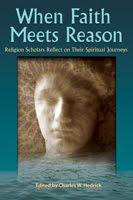
--Paul Alan Laughlin, "A Mystical Christian Credo", When Faith Meets Reason, pp. 49-59.

Wednesday, June 09, 2010

Celebrating Diversity at the Blue Plum

Eighty thousand folks visited the Blue Plum over the weekend according to the Johnson City Press. The Press also posted some photos.

PFLAG Tri-Cities gave away a thousand or so rainbow colored "Celebrate Diversity" stickers.


In the pic at the right (click here or click the pic to enlarge) two people are wearing them! Can you spot them?

Sunday, June 06, 2010

Becoming a Spirit-Intoxicated Prophet of Justice: A Sermon

Becoming a Spirit-Intoxicated Prophet of Justice
John Shuck

First Presbyterian Church
Elizabethton, Tennessee

June 6, 2010
More Light Sunday


I Kings 17:17-24
Luke 7:11-17

One of the marks of self-awareness, confidence and maturity is to claim for ourselves what we have projected onto others or onto God. There is no point in saying, for example, God is good or Jesus Christ is truth or Buddha is Enlightenment and leaving all those qualities out there attached to those figures alone.

The goal of the authentic life or the spiritual life if you like is to become transformed, born again, risen from the dead, intoxicated with goodness, truth, enlightenment, compassion, and justice. Claim it. Be it.

I am not talking about hubris. I am not saying that we are to claim that we are absolutely and always good, truthful, enlightened, and so forth. Of course not. That is simply a foolish blindness and denial of one's own dark side. I am talking about taking responsibility for the power we already have. We are to be the peace we want to see in the world. We are to be compassionate as God is compassionate. We are to embrace truth and walk in the light.

Nor am I talking about getting on some kind of spiritual treadmill in order to work ourselves into a frenzy of good works in order to earn a special spot in heaven. I don't believe there is any supernatural cosmic judge keeping an eternal list of who is naughty and nice. Spiritual authenticity requires no promise of reward or threat of punishment. As it says in the Bhagavad Gita:
Renounce attachment to the fruits.
A secular translation is to do good for goodness' sake.

A legend about Sufi mystic, Rabiah, tells that she would wander the countryside with a torch in one hand and bucket of water in the other. When asked why she said:
I want to use the jug of water to quench hell. With the burning torch I want to get heaven on fire, so that neither fear of hell nor the longing for paradise will prevent me from loving God alone for his sake.
Rabiah was one of those spirit-intoxicated prophets of justice. Historical Jesus scholar, Marcus Borg, coined that label for Jesus.

A spirit-intoxicated prophet of justice.

I think that is awesome.
To a world deadened by the drag of being told what we cannot do or who we cannot be, along comes these prophets, drunk on the spirit of life, calling us out and raising us up. The fourth path of Creation Spirituality is the via transformativa, or the way of justice-making. It is participating in the struggle for life. It is about raising people from the dead.

Our scripture readings feature two stories of raising widows' sons from the dead. Elijah and Jesus both perform this miracle. When we read stories about people coming back to life we know two things.
  • First is that we are in the realm of fiction.
  • The second is that the storytellers really want us to get something important but they have no other way of telling it without resorting to supernaturalism.
What is that something important? I think it is that we are to raise people from the dead. We are to become like Elijah and Jesus and Rabiah, spirit-intoxicated prophets of justice.

The stories of death to life are not supernatural miracles that we are supposed to believe someone performed once upon a time. They are pointers to the reality that life, our lives, your life and mine, and ours collectively as Earthlings can be transformed.


The scriptures themselves tell us these stories are metaphors.

Ezekiel goes to the valley of dry bones and the bones come rattling together before his eyes and sinews grow them and flesh grows on them and the spirit of breath blows through them. This isn't a zombie story. This is the story of a people, of a nation, reforming and starting again after being conquered.

In one of Jesus' parables the younger son returns home and the father needs to explain to the older son why he welcomed him home. And he tells him that his brother was lost and is now found. He was dead and is now alive. Stories of death to life are stories about people changing
  • from futility to joy,
  • from going through the motions to living purposefully,
  • from worthlessness to value,
  • from despair to dignity,
  • from shame to pride.
In June 1969 in Greenwich Village, New York City, at a bar called Stonewall, a few spirit-intoxicated prophets of justice decided that they had had enough. They had had enough of being beaten, arrested, and hassled. They had had enough of being misunderstood, of living in the shadows, of living in secret.

The Stonewall Inn was not a nice place. It was owned by the mafia. It catered to the most marginalized and poorest among the gay community: drag queens, hustlers, and homeless youth. The folks who hung around the Inn were not church going folks. What happened was not pretty or organized. When the police raided the Stonewall Inn on June 28, 1969, a riot erupted. It was a violent riot. It was spontaneous. People were hurt.
It lasted for several days.

From this riot a movement coalesced and these marginalized people began to find their spirit and their dignity. Gay activist organizations formed in New York within a few months and a couple of newspapers were organized for gay and lesbian rights.
These prophets said:
No more. We will take this abuse from society no longer.
It was a movement from death to life. One of the participants, Michael Fader described the mood:

We all had a collective feeling like we'd had enough of this kind of shit. It wasn't anything tangible anybody said to anyone else, it was just kind of like everything over the years had come to a head on that one particular night in the one particular place, and it was not an organized demonstration.... Everyone in the crowd felt that we were never going to go back. It was like the last straw. It was time to reclaim something that had always been taken from us.... All kinds of people, all different reasons, but mostly it was total outrage, anger, sorrow, everything combined, and everything just kind of ran its course. It was the police who were doing most of the destruction. We were really trying to get back in and break free. And we felt that we had freedom at last, or freedom to at least show that we demanded freedom. We weren't going to be walking meekly in the night and letting them shove us around—it's like standing your ground for the first time and in a really strong way, and that's what caught the police by surprise. There was something in the air, freedom a long time overdue, and we're going to fight for it. It took different forms, but the bottom line was, we weren't going to go away. And we didn't.Carter, David (2004). Stonewall: The Riots that Sparked the Gay Revolution
Since 1969 there has been a great deal of progress and a great deal of backlash and the churches, whether they like it or not, are in the center of this controversy. In 1974, David Sindt held up a sign at the General Assembly that read,
Is anyone else out there gay?
Like Stonewall in New York, that action at General Assembly is the iconic moment of the liberation movement in the Presbyterian Church.

It is June 2010, 41 years after Stonewall and still the Presbyterian Church (U.S.A.) has discrimination written into its official policy. This congregation is one of the many exceptions. We do not discriminate. We are a More Light congregation. That does not mean we have "more light" than others. It is a spiritual posture of humility. As opposed to the idolatry of certainty that we have all the truth, we know we do not know everything. We anticipate that more light, more wisdom, more truth is yet to come.

The church is correct that the issue is about morality. However, the morality is not about sexuality. That is a given. The moral issue is about discrimination, prejudice, and homophobia. That is what is immoral. The choice for each of us in our own setting is to confront this immorality with truth.

We are to be spirit-intoxicated prophets of justice. That is no one else's job. It is ours.


Some may wonder why I care. Certainly there are other issues, injustices, and causes that aren't so divisive. Why advocate for gay rights in the church? Why does a straight guy with a straight family care? Why risk getting church folks upset?


It was in the context of church that I was made aware. My first week at seminary in 1989 at Princeton I sat with other first year students at orientation. Representatives of different organizations and groups spoke and each offered a description of what they were about. This guy stood up and said he belonged to a group called Presbyterians for Gay Concerns and invited anyone straight or gay to come to a meeting.

I obviously have led a sheltered life. I am sure there were gay-straight alliance groups at the University of Washington where I did my undergraduate work. I didn't know about them. They weren't on my radar. I didn't even know (or know that I knew) a gay or lesbian person.

So when this guy said that, I thought, "Huh. That's interesting." But what happened in the room next was the defining moment for me. You could feel the tension. I looked around and saw people were looking down to their laps. Praying? The guy next to me said under his breath but loud enough for me to hear at least:
They shouldn't allow a group like that on campus.
That sentence has been my motivation.
They shouldn't allow a group like that on campus.
Why not? That is who he is. I am embarrassed to say that I never contacted the person who told us about his group or attended the meetings. But I look at that moment as the light going on moment. I was made aware of gay people and of homophobia in the exact same instant and all in the context of church and ministry.
They shouldn't allow a group like that on campus.
Those are fighting words.
They shouldn't allow gay and lesbian people to be ministers.
Those are fighting words.
They shouldn't allow gay and lesbian people to have their relationships blessed and honored in church.
Those are fighting words.
They shouldn't allow gay and lesbian couples to have the same rights, privileges, benefits and responsibilities as straight couples.
Those are fighting words. When I saying fighting, I am not talking about fighting people. The Apostle Paul reminds us that we are struggling not against flesh and blood but principalities and powers. We are fighting injustice and misunderstanding. We are fighting the spirit of death and despair, shame and isolation. To do that we become spirit-intoxicated prophets of justice who say Yes! to life, dignity, and hope.

You are that prophet.
When you accept yourself as you are…

When you correct falsehoods…

When you stand up for yourself and for those who are put down…

When you speak the truth even though you think it would be easier to remain silent…
When you treat others as you want to be treated…

You are that prophet.


Amen.

Thursday, June 03, 2010

Meaning of Life, Part 54

Thus I face a most painful question: Is the church an institution that I wish to save? Don Cupitt has advocated taking leave of God; is it now time to take leave of the church? Will it remain forever locked in theological contradiction and social irrelevance? Should I leave the dead to bury the dead or remain and fight my corner of the battle? Even if at some future date (and it could be decades hence) my church should, for example, allow gay priests to openly express their sexuality and permit radical theology to thrive again, is it worth the effort? Is it reasonable to give one's life to an organization that is always at least a generation behind the rest of the world's best and latest thinking?

It is an interesting dilemma. I oscillate between depression and hope. I am filled with despair by those who use religion as a force for evil, constantly manipulating it to ostracize or terrorize those who are different. I weep over those who use sacred texts as a battering ram to justify hatred and fear. I am continually perplexed by the hate-filled "lovers of Christ" who divide humanity into "us" and "them" More and more I identify with those on the margins of the church, with those who have left its embrace, and with those in centers, networks, and forums that combine doubt and uncertainty with reverence for life. I find more spiritual wonder in watching the sun set over the West Australian Ocean than in many liturgical services. And yet I have also met many fine fellow Christian travelers who love the Lord even as they share my frustration with a conservative and often narrow-minded institution.

And so I choose to stay the course...

Nigel Leaves, "A Journey In Life", When Faith Meets Reason: Religion Scholars Reflect on Their Spiritual Journeys, p. 37

Tuesday, June 01, 2010

Gradye Parsons Responds to Israeli Assault

Stated Clerk of the PC (U.S.A.) General Assembly, Gradye Parsons, released a statement regarding the latest adventure by the Israelis.

We affirm the call of the United Nations Security Council for a prompt, impartial, credible, and transparent investigation of the May 31, 2010, events, in conformity with international standards. We ask President Obama and the United States Congress to support and ensure the fulfillment of this call.

We call for an end to the blockade of Gaza and urge the government of Israel to permit the immediate delivery of humanitarian assistance to the people of Gaza.

We call on the Hamas government to work to end rocket attacks by all parties against Israel.

We call for the release of Israeli soldier Gilad Shalit.

We call for the release of all ships and civilians held by Israel.

We call on the United States government to play an intensive and faithful role as a peacemaker — honoring international law, supporting UN efforts to end the humanitarian crisis in Gaza, and working for the day when Palestinians and Israelis alike know justice, peace, and security.


More Light Sunday


This Sunday, June 6th, is More Light Sunday. The theme for 2010 is "Believe Out Loud." Many of us believe that it is time to remove
G-6.0106busybody once and for all.

I received in the mail today a stack of blank cards from Michael Adee of MLP. Our Peacemaking Committee will have them available on the Peacemaking table this Sunday and for several Sundays leading up to GA.

Here is what the card says:

Greetings to Our General Assembly Commissioners:

The time is Right Now to remove barriers to ordination for lesbian, gay, bisexual, and transgender Presbyterians. Please support the removal of G-6.0106b and other barriers to equality.

Name_______________

Address_____________

City, State, Zip________________

Feel free to add your own message here.

_________________________________
You can order cards or just a send a card or note of your own by June 25 to:
More Light Presbyterians
"Write Now" Campaign
4737 County Road 101,
PMB #246
Minnetonka, MN 55345-2634
It couldn't be simpler.

Not to give the whole service away, but I think we will use these ten affirmations in worship on Sunday:

Ten Affirmations
for Gay, Lesbian, Bisexual, and Transgendered (GLBT) Spirituality
Completed by the Working Group on Religion and Spirituality
Voices for a New Tomorrow

1. We celebrate the unity we create in the midst of our diversity.
2. We affirm the inherent beauty, worth, and dignity of every GLBT and straight person.
3. There are many paths to the sacred. The spiritual paths of GLBT persons are among
them.
4. The choice is not whether to be GLBT or straight but whether or not to live an
authentic life.
5. Coming out is a courageous and spiritual act.
6. Sexual expression is one of the many sacred ways that GLBT and straight adults can
express the depth of love in their relationships.
7. We support each person’s journey of integrating spirituality and sexuality which
leads to wholeness.
8. Marriage is a sacred union for people who are committed to each other without regard
to gender. Love makes a family.
9. Spiritual leaders must take responsibility to lead, protect, and affirm GLBT people:
children, adults, and their families.
10. No one is free when others are oppressed.
Join us June 6th for More Light Sunday!


Let's make a change for the better.